
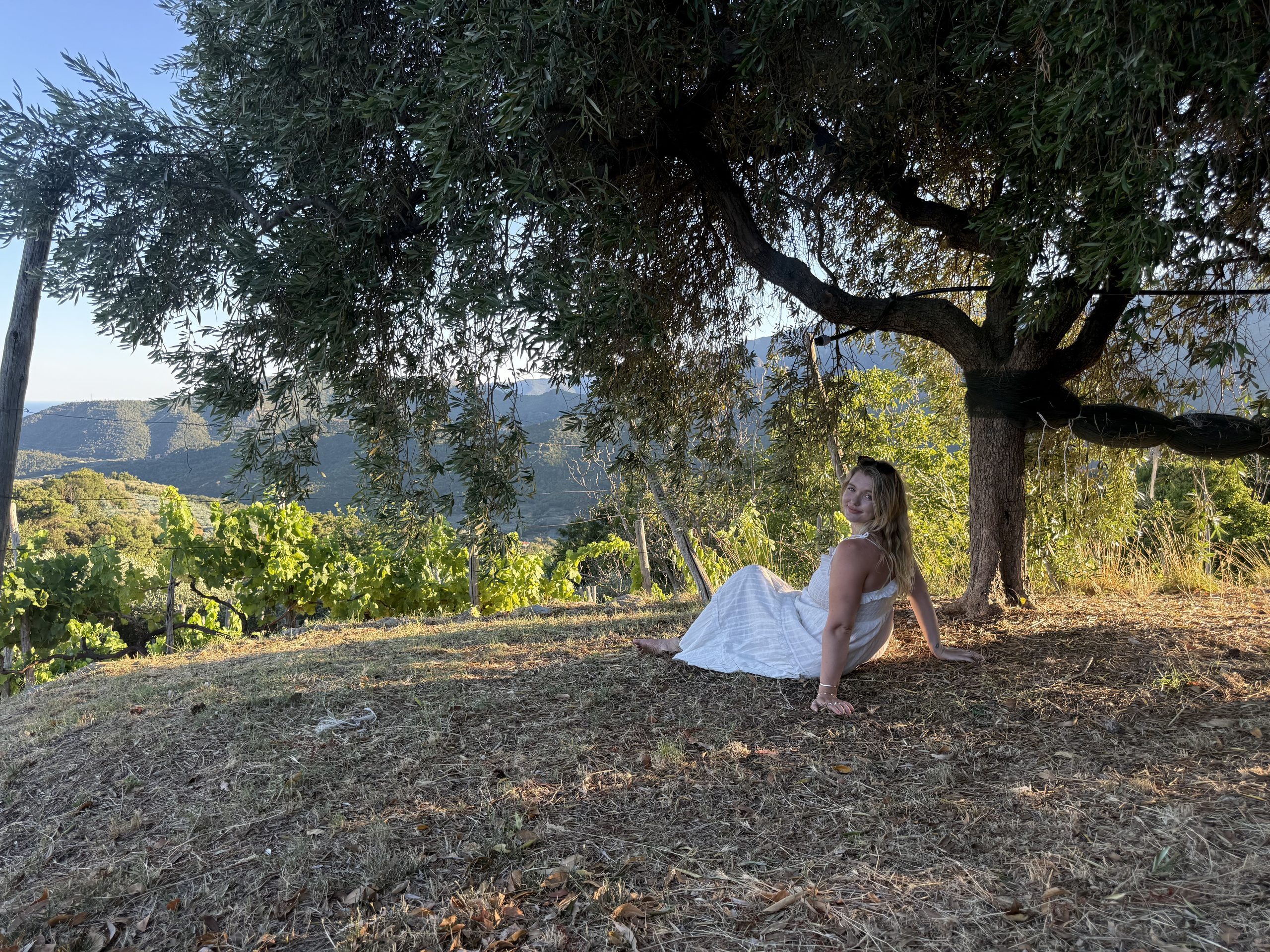
If you’re coming to Liguria at any time of the year, make it September. Here is a short guide on what to do, eat, romanticise, fantasise about, and delight in this month in West Liguria.
I’ve only lived here, loving this land in a long-distance Schengen Shuffle-style love affair, since February, so I cannot say with confidence whether this is the best time to visit.
However, I can say that now is the start of shoulder season.
If you want blue skies, warmth to have coffees outside, hikes in the mornings and late afternoons, swims in the ocean, your pick of a sun lounger in the beach club, and days spent reading in the piazza, now is your time. Schools only went back last week, on the 14th, and I have on authority – from one of the shop owners in town – that autumns here are magnificent.
There’s a Confucian saying, “Would you rather live in the mountains or beside the sea?”
If you reply with the mountains, you are kind. And if you say the ocean, you are wise.
Liguria offers both in abundance.
A potted history of Liguria
Liguria is Italy’s third-smallest region and home to a land of sea people, once known as i Liguri.
They were merchants and sailors whom Roman and Greek writers described as hardy, warlike, resilient, and frugal. At the height of Liguria’s power, Genoa was called La Dominante dei Mari, the ‘dominatrix’ of the seas and the Silk Routes, and the Republic of Rome painted Liguria as pirates before eventually conquering them between 238 and 117 BC.
The land itself is shaped like an archer’s bow, stretching from France to Tuscany between the Ligurian Sea and the mountains. You have only a few miles of land along the coast before it shoots dramatically up into the hillside.
If you drive East of Genoa, you’ll find the destination spots of Cinque Terre and Portofino.
Yet, if you drive west, you’ll come closer to the French border and find somewhere altogether quieter, and arguably more alive in the winter months.
That’s where I am.
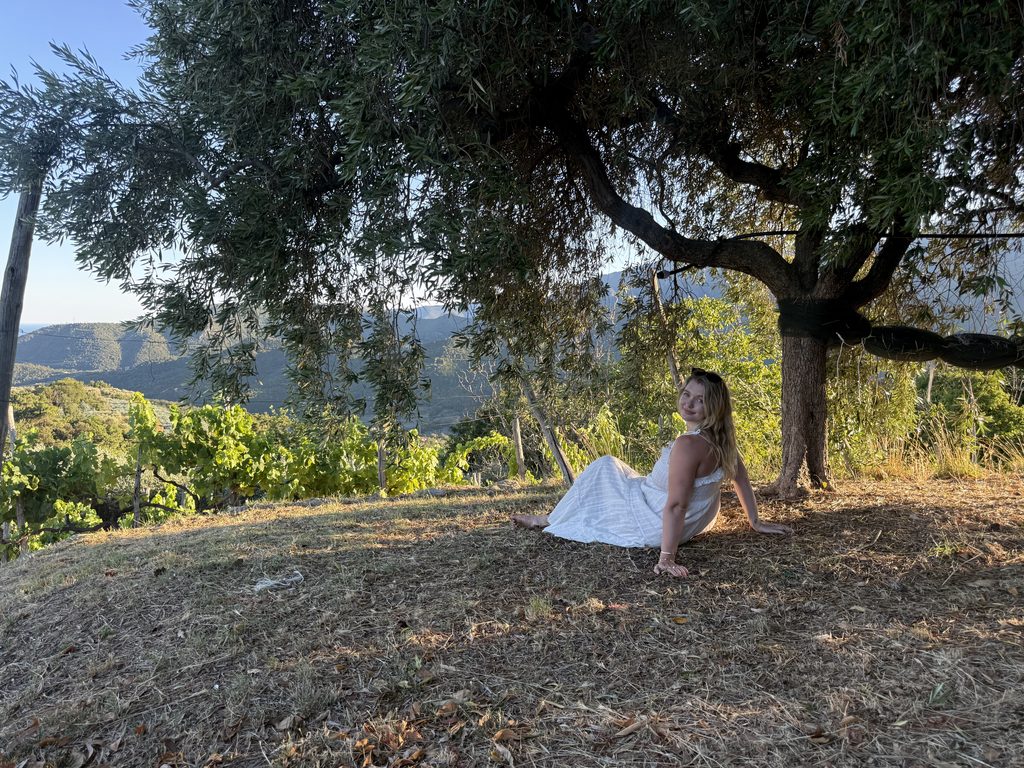
This is the first in a series of monthly guides to romanticising life and eating with the seasons here.
Each monthly roundup includes:
01 A saveable itinerary for when you’re in this neck of the woods, including what to do in West Liguria, where to eat, and dates to circle in the diary.
02 An almanac-style update on the olive grove: what’s in season, some notes on wild foods and foraging, as well as some key moon dates.
03 Personal notes charting the seasons month by month.
Your September itinerary: Everything to do in West Liguria
Before you visit, I’d recommend researching the open-air market days. These are when the towns on the Italian Riviera come alive and are unmissable. If you’re local, that’s the day when you get your vegetables, fish, meats, cheeses, and even plants for the garden. Go with some euros and see what you find.
Day 1
Market days in Finale Ligure are on Thursday.
Start the day by sitting in the old piazza with a brioche (croissant) and cappuccino, then buy two kinds of focaccia – the kind covered in pesto and the other in thin slices of potato – from a bakery called Il Panificio.
Piazza Vuillermin is a car park at the top of town and where you’ll find fresh produce. After walking through town, either around the cobbles or beside the beach, buy a rotisserie chicken with a cone of deep-fried olives and crispy roast potatoes, then a ball of fresh mozzarella, some good tomatoes, rocket, and fresh peaches or figs, and make focaccia sandwiches for a beach day.
After snorkelling and swimming in one of the public beaches along the strip, finish golden hour in the medieval town of Finalborgo.
The streets are dotted with ceramicists, jewellery makers, stationery shops and tiny boutiques. After mooching around, stop for an aperitivo or head up to the Half-Moon Gate, the Porta della Mezzaluna, to watch the sunset over the town.
Day 2
If you have a hire car, spend the next day driving along the coastline, avoiding the tolls, through Noli and to the beach across from the protected Bergeggi nature reserve, an island that’s around 280 metres from the coastline. You can book a kayaking tour that gives you permission to swim and snorkel in certain areas of the island.
Then, eat or have aperitivo at the beach club (we went to Samoa) and time the drive home with sunset through Noli.
We went to the beach club then kayaked, which resulted in a rather tipsy kayak and swim for all of us…
Day 3
On the third day, have a no-plan morning and spend the afternoon at Borgio Verezzi, a gorgeous village in the mountains above Finale.
There are two historic things of note here. First, if you’re someone who thinks about ancient Rome often, the Romans defeated the Ligurians here in 181 BC. And second, there’s a church called the Chiesa di Santa Maria Maddalena in honour of Mary Magadalene, who allegedly landed here while en route to Marseille.
From the village, follow the signs down to Grotte di Borgio Verezzi.
The walk takes around an hour and reaches a two-million-year-old cave, which was discovered in 1933 by three boys from Borgio who followed a stream and later arrived with candles. Inside, there are multiple chambers, an underground lake, and also bone samples of rhinos, elephants, tigers, crocodiles, bears, and mammoths.
Guided tours for €10 happen about once every hour, and it’s around 16°C inside. Bring plenty of water, a jumper, and comfortable shoes for the walk. After the tour, climb back up to L’Antica Società for a dinner at sunset. Pre-booking strongly advised.
Notes on the Month: September 2026
At 02:06 on Wednesday 23rd September in Italy, we have the Autumn Equinox. Things are slowing down and drawing inwards. Then on Saturday, we have the Harvest Moon: a Full Moon in Aries.
Ever since landing to Italy on the Digital Nomad Visa on the last day of August, I’ve been deep in planning. This week, I want to focus on where I’d love to be in the Springtime and to journal what a dream day then looks like. To get there, what do I need to do, learn, read, or study?
Right now, all I know is that I want to be rooted in one place; to fully unpack the suitcase, start my day in the ocean, end it hiking in the mountains, and work in between.
I’m moving from a season of spending and moving to what I hope will be a period of saving, building the business (my one-woman product storytelling agency in nature and climate tech), and perhaps most importantly of all, feeling joy, both in the mundane and in the magical.
That’s the one thing that’s kept slipping this year.
About Pasta Nipotina
Six years ago, I did as we all did in the pandemic and started to make fresh pasta. Writing about and photographing spaghetti draped over kitchen counters led me in some roundabout way to the career and business I have now – Cantadora, working with climate and nature tech startups on their storytelling.
And now, it’s led me here.
To a villa in the Ligurian mountains, twenty minutes from the sea, with a plot of land in an olive grove beside mimosa trees that wave yellow in the wind and plum trees that are just opening into blossom.
I’ll be sharing updates on moving to Italy on the digital nomad visa, stewarding a plot of land in a regenerative olive grove, Ligurian recipes (naturally), grandmother medicine, and more guides like this one on what to do in West Liguria below:
- Substack: Writing Scrap Bowl
- Instagram: @pasta.nipotina.


