
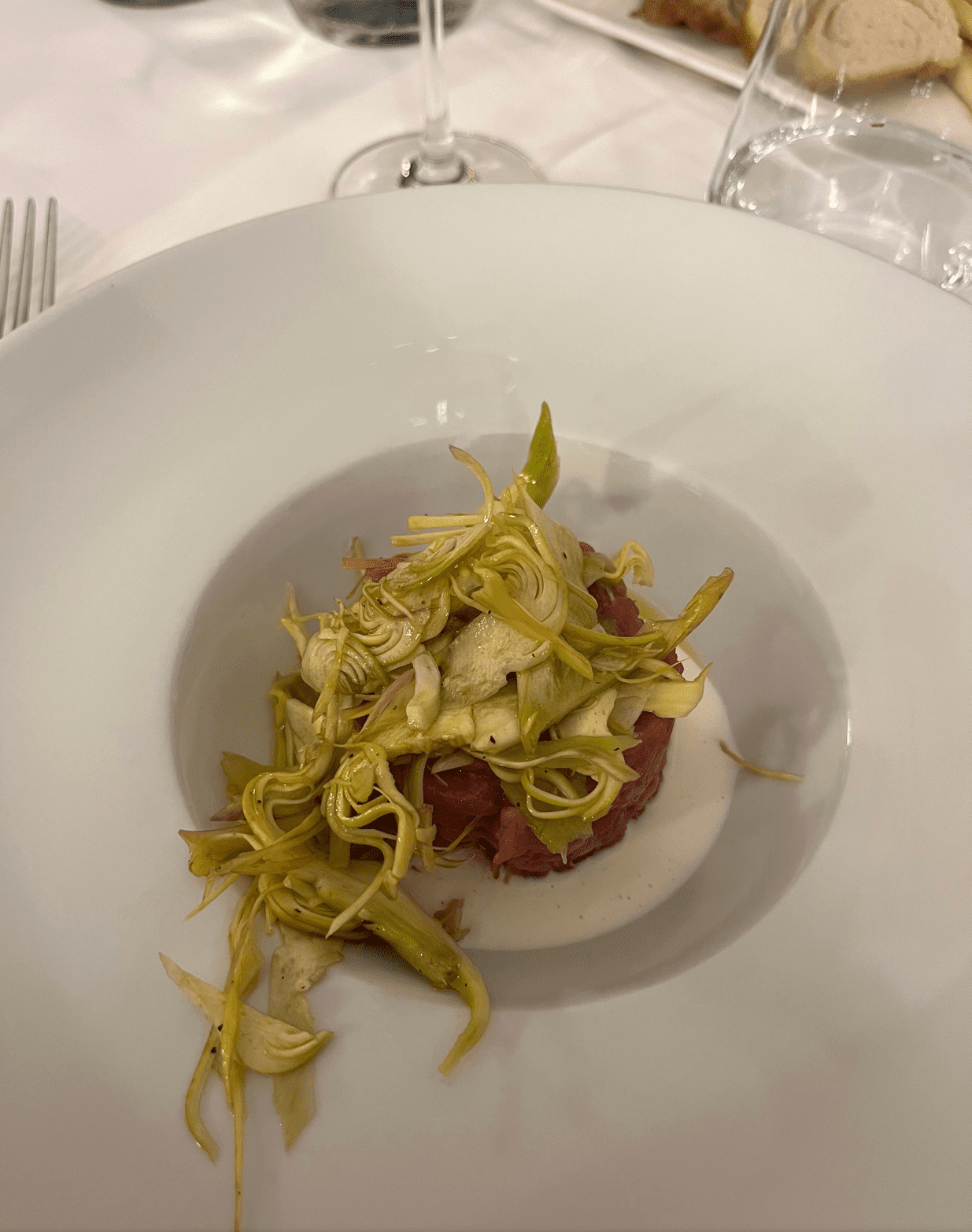
On my final night in Liguria, I went for dinner at Il Sogno with my landlady and her daughter. Her son and daughter-in-law work at the restaurant, and tonight was Artichoke Night…
Serata a base di carciofi d’Albenga.
Stasera;
Tutto esaurito.
Totally sold out.
Il Sogno means the “dream” in Italian.
And so it was that I began to wonder if I’d actually died.
Maybe I’d taken a bend too fast and driven the hire car over the cliff?
Whatever had happened, I’d been plunged into this new reality of artichokes, poodles, and chilled rosé, and I was starting to question whether this was all one brilliant cosmic ruse.
Il Sogno, Finale Liguria
Il Sogno is a fish restaurant in the old town of Finale, a city of sailors and fishermen.
Close to the main piazza and two streets away from the ocean, its name is written in big blue cursive letters between two yellow stone arches. Inside, the dining room is a long cavern with floor-to-ceiling wine fridges.
Everyone seems to know each other.
Beneath two enormous chandeliers and amongst white linen-covered tables, they’re exchanging kisses, pouring wine, and purring sweetness over the restaurant’s resident dog, a little Yorkshire terrier who trots in and out amongst the heels and fur coats.
And tonight, each table is adorned with a posy of artichokes, rosemary, and sage, along with a menu rolled and tied with ribbon.
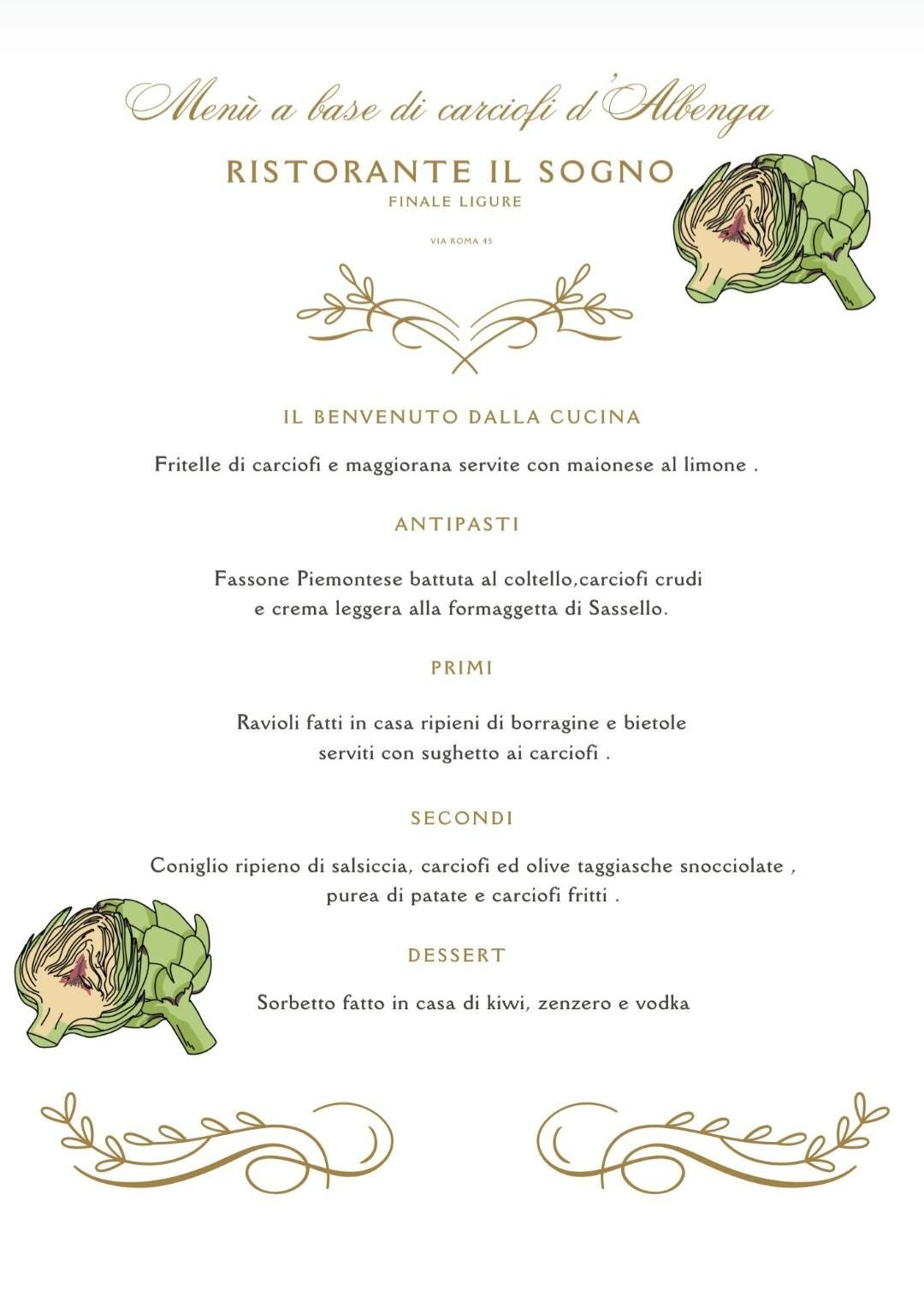
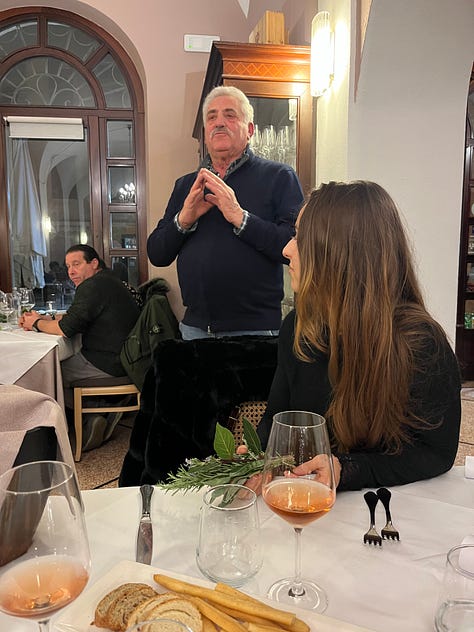
Before the fritelle di carcifo e maggiorna come out – dainty artichoke and parsley fritters with blobs of lemon aioli – the room quietens, and Aimone takes the stage.
Now, I’ve been to my fair share of restaurants, but this was the first time the producer has ever made a speech.
I’m also not going to pretend to have understood much of what Aimone said, but I believe – thanks in part to the translation and the booklet – that he shared the story of BioVio: the multi-generational agritourismo farm that he runs with his partner, Chiara, and their family.
There, they grow within their stone walls grapevines, olives, herbs, borage, Swiss Chard, and of course, the prickly artichoke of Albenga.
The spiny artichoke of Albenga
Harvested from January to the end of April, this spiny artichoke is what Albenga is famous for – alongside the trumpet courgette, oxheart tomato, and purple asparagus.
Together, they make up the Albenga Famous Four.
The spiny artichokes’ heads are more tapered than globe artichokes and are slightly violet in colour, with each leaf (or “bract”) having a yellow claw-like spine that leaves a bruise if pricked.
Fried, raw, or steamed, they are all things delicious.
Sweet and crunchy when fried; delicately tender when shaved atop the Piedmontese beef tartare; fragrant inside the borage and Swiss chard ravioli; and strong enough to hold their own against the rabbit, the “coniglio”, that had been stuffed with sausage, Taggiasca olives, and served with purea di patate and more fried artichokes.
At the ravioli, anyone who was still hungry could ask for more, and steaming-hot servings were passed out without a second thought – heaped with parmesan snow and to the chorus of clattering forks.
Over dinner, we talked about the divine feminine and polarities with the masculine; the dolphins you could see if you swam far enough; and the importance of eating local fish to build a connection with the sea. Most men join fishing competitions on Sunday, where there’s a chance to win a wheel of Parmesan or (if I understood correctly) gold coins for the biggest trout.
All of it was ethereal.
The dinner ended not with an artichoke, but with a shot of vodka poured over kiwi sorbet that I fished about for with a spoon – suddenly aware of the drive back up the mountains and keen to not lose my head any more than I already had.
As the evening drew to a close, our little group wound its way along the cobbled streets with posies of artichokes tucked into the crooks of arms. A corner bar was still open, its doors ajar, and the sound of live music trailed into the night, lingering past the church and the two roads that led to the piazza.
When my heel caught on one of the cobbles, I was told that, as a child growing up here, you memorise them so closely that walking them as an adult is second nature.
Naturally, it’s sometimes all too easy to focus on the bruises, on the innocuous violet-tinged spines that snag the skin. In fact, there’s often something very romantic about them.
But what the last two weeks have shown is how to be truly, deeply happy, rather than scan for the next death drop or beautiful facade to fall.
These are the rituals I want to bring with me into the spring: the art of appreciating the spine of something, all while savouring its tenderness. Sinking teeth into pleasure, taking time to eat and move slowly to memorise the cobbles. Even, and especially, when wearing cowboy boots.
Sometimes, it gets to be this good.
“More, please!”


